Garden Maintenance Forest Hill — Recycling and Sustainability
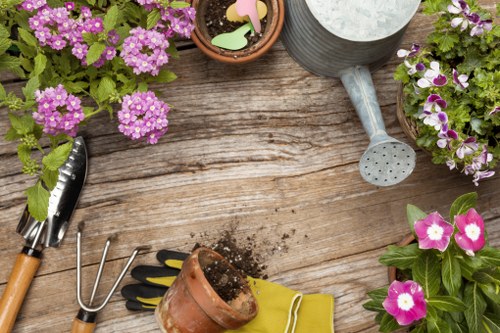 Garden Maintenance Forest Hill blends practical lawn care with an eco-first approach to waste and resource management. Our sustainability page explains how our forest hill garden maintenance services minimise waste, divert green materials from landfill and support a low-carbon local economy. We have set an ambitious recycling percentage target for our on-site operations and client projects, and we track progress through regular audits. By embedding sustainable rubbish gardening practices into every contract, we help neighbourhood gardens become active parts of the circular economy.
Our routine operations prioritise segregation at source. Garden pruning, turf stripping, and soil removal are handled so that organic material goes to composting and woody debris is separated for chipping or reuse. We use clear labelling and partitioned containers on-site so clients and crews know which stream each item belongs to. This reduces contamination and increases yield for local green waste processing, aligning our approach with the boroughs' kerbside systems and separation expectations for garden waste, food waste and mixed recyclables.
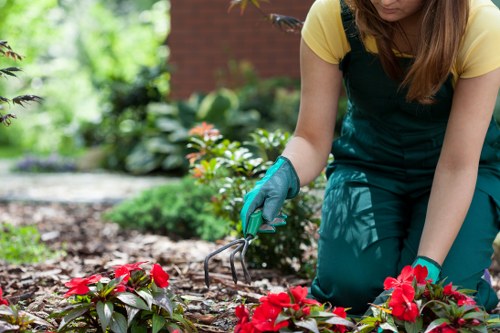 As Forest Hill gardening maintenance specialists we work with the waste infrastructure that serves SE London. Local transfer stations and materials recovery facilities (MRFs) that receive sorted green waste and recyclable materials are an essential part of our logistics chain. We deliver segregated loads to council-approved transfer stations serving Lewisham and neighbouring boroughs such as Southwark, ensuring that compostable loads go to aerobic composting sites or in-vessel composting facilities, and recyclable timber, metal and plastics reach appropriate recovery streams.
Sustainability targets, partnerships and local recycling activity
Our headline target is to achieve a 70% recycling and reuse rate for all garden-derived material across our operations by 2028, with interim milestones reported annually. This target covers green waste, wood, soil, stones and salvageable hard landscaping materials. We also track carbon intensity per job and aim to reduce fleet emissions year-on-year through electrification and operational efficiency. The target complements the boroughs' own waste separation strategies, which emphasise separate collection of food, garden and dry recyclables to maximise resource recovery.
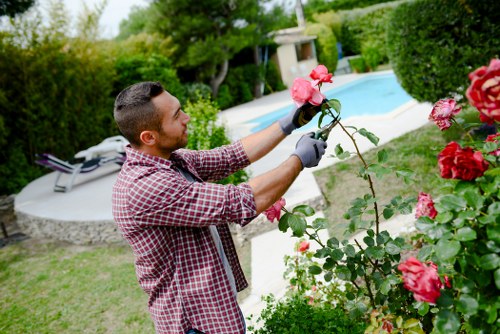 We maintain partnerships with local charities and community organisations to give useful garden items a second life. Working relationships include charities that accept potted plants, reusable paving slabs, tool donations and salvaged timber for community projects. Our reuse network ensures materials diverted from garden clearances can be offered back to the community or to social enterprises, extending the service life of landscaping materials and reducing demand for virgin resources. Example recycling activity relevant to the area includes:
- Composting and mulch production for community allotments
- Chipping and reuse of wood for pathways and raised beds
- Separation and collection of metals, plastics and inert soils for proper recycling
We also coordinate garden waste collections with local volunteer groups who help redistribute healthy plants, seedlings and surplus produce to food banks and community growers. These partnerships help ensure that usable organic matter and plants are kept in productive cycles rather than becoming disposal liabilities. Our reporting includes volumes reused, donated and sent to approved transfer stations, reflecting the mixed-model approach that many London boroughs use to manage household and garden waste streams.
Low-carbon logistics and sustainable rubbish gardening areas
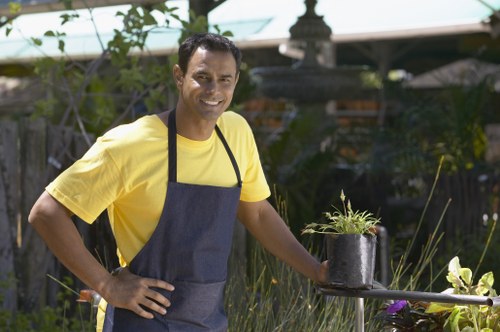 Fleet and on-site systems are central to delivering low-impact garden services. Our fleet includes low-carbon vans — a mix of fully electric vehicles for local runs and plug-in hybrids for heavier loads — and we prioritise route planning to reduce miles and emissions. Vehicle charging is scheduled to coincide with low-carbon electricity windows where possible. By combining efficient routing, modular containment for segregated materials and lightweight trailer systems we lower the carbon cost per cubic metre of green waste transported to transfer stations.
Creating sustainable rubbish gardening areas on-site is part of every job plan. Designated compost bays, temporary leaf-mulch zones and secure storage for salvageable materials allow us to process and sort materials before transport. We avoid mixing soil with woody debris, segregate invasive species for specialist treatment and retain clean stone and brick for reuse. These practices increase the proportion of material diverted from landfill and reduce the need for transportation to specialist facilities, dovetailing with the boroughs' waste separation approach and local transfer station acceptance criteria.
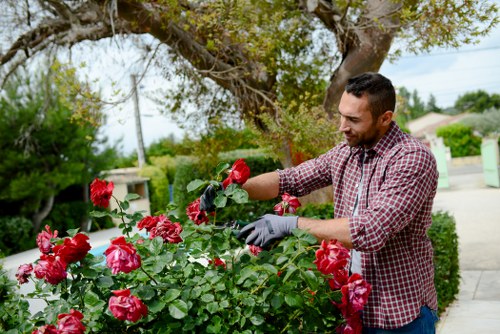 In summary, our Forest Hill garden maintenance approach puts circularity at the heart of practical gardening work. We combine a measurable recycling target, collaboration with transfer stations and community charities, and a shift to low-carbon vans and smarter logistics. By applying these principles across every job we create greener, more resilient gardens and contribute to borough-wide efforts to separate, recycle and repurpose garden and household organics. Maintaining gardens sustainably isn’t just good practice — it’s our commitment to the local environment and future resources.